In our previous discussions, we’ve introduced you to Gap Psychology, a concept that fuels the desire to widen the income/wealth/power Gap below and to narrow the Gap above.
This psychological phenomenon not only perpetuates social disparities but also has dire implications for our environment.
The very rich want wide Gaps because, without Gaps, no one would be rich. We all would be the same. The wider the Gaps, the richer the rich, and the poorer the poor, i.e., “inequality.”
The rich are a major cause of global warming.
Wide Gaps negatively affect poverty, health and longevity, education, housing, law and crime, war, leadership, ownership, bigotry, supply and demand, taxation, GDP, international relations, scientific advancement, the environment, human motivation and well-being, and virtually every other issue in our lives.
The rich bribe our thought leaders to tell us wide Gaps are just and necessary, a result of innate superiority and hard work — that the rich and the poor have earned their places.
The rich bribe the media through ownership and advertising dollars.
They bribe economists through university endowments and jobs in think tanks. They bribe politicians through campaign contributions and promises of jobs in the industry.
The rich try to convince us that federal benefits are unaffordable and unsustainable, but we have the power to demand these benefits and make a significant change in narrowing the Gap and protecting the environment.
It’s part of the Big Lie that taxpayers fund such benefits as Medicare, Social Security, poverty aids, college loan forgiveness, and other benefits to the middle- and lower-income groups. (No mention is made of taxpayers funding tax breaks for the rich.)
But in a Monetarily Sovereign government like ours, taxpayers fund nothing. (Taxpayers do fund monetarily non-sovereign state and local government spending.)
All federal spending is funded by federal government money creation, ad hoc. Federal tax dollars, unlike state/local government tax dollars, are destroyed upon receipt.
The sole purposes of federal taxes are:
To control the economy by taxing what the government wishes to discourage and by giving tax breaks to what the government wishes to reward.
To assure demand for the U.S. dollar by requiring taxes be paid in dollars.
Here are excerpts from a NewScientist Magazine article describing another problem caused by the Gap, aka “inequality”:
Inequality is a major obstacle to sustainability. The super-rich are an environmental horror story that we can’t ignore. By Graham Lawton
According to the United Nations Environment Programme, the average greenhouse gas emissions of someone in the richest 10 per cent of global society are around 20 times the average of someone in the poorest 50 per cent.
Research by Oxfam and the Stockholm Environment Institute found the world’s richest 1 per cent collectively emit the same as the poorest two-thirds.
A new book by Ingrid Robeyns puts this in stark personal terms. In Limitarianism: The case against extreme wealth, she calculates that to get to net zero, the average per capita carbon footprint needs to be 2 tonnes a year. The European average is 8 tonnes.
The top 1 per cent emit over 100 tonnes, with billionaires emitting a mind-blowing 8000 tonnes, mostly through the use of private jets and superyachts.
There are very few billionaires, but their consumption is only part of the equation. Huge inequality is bad for everyone – and the planet.
In a recent webinar about the book, Pickett said: “What The Spirit Level showed was that economic inequality, specifically income inequality, was related to a whole range of different problems: health problems, issues to do with human capital development, such as educational attainment and social mobility, and everything to do with relationships.
The crucial point is that inequality seems to affect almost all of society.” In the years since 2009, the evidence for this has only grown stronger.
As for the environment, inequality isn’t just bad for the obvious reasons.
A recent paper in Nature Climate Change makes a compelling case that inequality is a major obstacle to sustainability, because people at the lower end of the income spectrum don’t have the resources – money and time – to make the necessary lifestyle changes.
Not only does inequality limit people’s opportunities to make sustainable choices, it also drives unsustainable consumption at lower income levels.
Humans are hardwired for “social evaluative threat” – anxiety about how we are seen by others.
This threat induces a type of stress called status anxiety. Subconsciously, we are all evaluating where we stand in the economic pecking order and trying to climb to the next rung, or at least not slide down.
One of the easiest ways to alleviate status anxiety is conspicuous consumption.
The cause for “status anxiety” is “Gap Psychology.” You can read more about Gap Psychology here, here, here, and many places elsewhere in this blog.
In any society, the poorest people have the highest levels of status anxiety and the richest the least. But here’s the rub: in more unequal societies, status anxiety is higher across the board.
One study found that in the most equal societies, the poorest have a status anxiety score of 2.2 out of 5, as judged by their degree of agreement with questions such as “others look down on me because of my job situation or income”.
The richest score about 1.8. In the most unequal societies, the scores are 2.7 and 2.1. In other words, the richest people in very unequal societies have roughly the same level of status anxiety as the poorest in more equal ones.
How do people respond to status anxiety? In part by consuming high-status goods.
Multiple research projects have found that people living in highly unequal parts of the US tend to spend more on swanky cars and designer clothes, which have a very large carbon footprint.
“Status competition driving consumerism upward is a huge obstacle to moving towards sustainability,” said Wilkinson in the webinar with Pickett.
Many Western societies are still tolerating, or even encouraging, eye-watering levels of inequality.
But they also underestimate the obscene wealth held by a few people who emit more than just greenhouse gases. It is a tough argument to make, but it has to be made.
Louboutin shoes: Affordable. Saving the world: Unaffordable.
As Wilkinson said: “We cannot solve the environmental crisis without solving the inequality crisis.”
Gap Psychology dictates that the last thing the rich want is to solve the inequality crisis. It’s what makes them rich.
That is why they bribe the media, politicians, and the economists to tell you various forms of the Big Lie in economics, including such lies as:
Social Security and Medicare will run short of money because fewer workers are supporting more older people.
To prevent Social Security and Medicare from running short of money, FICA must be increased and/or benefits must be reduced.
The federal deficit and debt are unaffordable and unsustainable.
Taxpayers pay for federal spending.
Comprehensive, no-deductible Medicare for All, Social Security for All, increased poverty aids, free college for all who want it, and other benefits for the middle- and lower-income groups are unaffordable.
All of the above are untrue. They could not exist without the active counter messaging by your information sources.
They want you to believe the Big Lie that the finances of our Monetarily Sovereign government are the same as your personal finances.
The federal government not only can afford to fund all of the benefits to you, while also funding the efforts to counter global warming.
The rich want you to believe that either global warming doesn’t exist, or if it exists, the costs to end it are too great for the government to fund, or for taxpayers to fund. All lies.
The government has the infinite ability to fund anything, without collecting a penny in taxes. To admit that, your information sources also would have to admit paying for your benefits also are affordable.
But that would narrow the Gap and make the rich less rich.
The sole benefits the rich allow are the tax breaks that only they can access. Those supposedly are “affordable” and “sustainable.”
Meanwhile, life on earth is threatened as the climate becomes less survivable. Eventually, the rich will discover that they need to support more equality for them to remain rich.
But that may be too late to save the world.
There’s still time to contact your Congressperson, tell them you are quite aware that the federal government can create infinite money without taxing or borrowing, and can provide far more benefits than it currently does.
Tell them the Gap is not sustainable, and the rich may have the money, but not the votes. Demand federal benefits for those who are not rich.
Debt is an obligation that requires one party, the debtor, to pay money or otherwise withheld from another party, the creditor. Debt may be owed by a sovereign state , country, local government, company, or individual.
Loans, bonds, notes, and mortgages are all types of debt.
Here is what an AI (Artificial Intelligence) says about federal debt. Read it, keeping in mind that the Monetarily Sovereign U.S. government has the infinite ability to create its own sovereign currency.
As we will discuss, the so-called federal debt isn’t debt and it isn’t federal.
The U.S. government never, unintentionally, can run short of U.S. dollars:
The federal debt of the United States is the total national debt owed by the federal government to Treasury security holders.
It encompasses the accumulated borrowing and the associated interest owed to investors who purchased these securities.
Federal debt is the same as national debt?? Immediately we arrive at confusion because “national” debt can include the debt of the non-federal (private) sector, i.e., the total of mortgages, car loans, business loans, etc., and state/county/city debt.
Because the federal government is Monetarily Sovereign and the other entities are monetarily non-sovereign, one rightly should assume that federal debt should be treated differently.
Let’s break it down further:
Federal Deficits:
Federal deficits occur when the government spends more money than it collects in revenue during a fiscal year. To cover these deficits, the government borrows money by issuing Treasury bonds, bills, and other securities.
These deficits contribute to the overall national debt because they represent the accumulated borrowing over time.
Treasury Securities:
Treasury securities are financial instruments issued by the U.S. Department of the Treasury to raise funds for government operations.
These securities are issued to the public and other entities, including individuals, corporations, state or local governments, foreign governments, and other non-federal entities.
Federal Debt Held by the Public:
The federal debt held by the public consists of securities held outside the government. It includes:
Interest-bearing marketable securities: These are marketable Treasury securities (bills, notes, bonds, TIPS, and FRN) held by various entities.
Interest-bearing nonmarketable securities: These include Government Account Series held by fiduciary and certain deposit funds, foreign series, state and local government series, domestic series, and savings bonds.
Non-interest-bearing marketable and nonmarketable securities: These include matured and other types of securities.
The total federal debt held by the public is calculated based on face value less net unamortized premiums and discounts, including accrued interest.
The federal debt represents the total outstanding obligationsowed by the U.S. government, including both deficits and the issuance of Treasury securities. It reflects the financial position of the government and its ability to meet its obligations.
That is generally what most people believe. It is wrong on several counts.
First, the federal debt does not “reflect the financial position of the government and its ability to meet its obligations.The federal government has the infinite ability to meet its obligations.
Deficit reductions (red line) result in recessions (vertical gray bars), which are cured by deficit increases.Even the COVID recession of 2020 was cured by the increase in federal spending — the so-called “debt” — that year.
Read it again while again keeping in mind the Monetarily Sovereign U.S. government has the infinite ability to create its own sovereign currency. It never, unintentionally, can run short of U.S. dollars.
Now ask yourself: Why would the federal government borrow dollars? The answer: It doesn’t.
Notice the definitions of federal debt encompass two completely different things:
The total of federal deficits, i.e. the net total difference between what the government has spent and what it has received in taxes.
The total of Treasury Security accounts.
1. Total Federal of Deficits: In most years, the federal government spends more than it receives in taxes. This is called a “deficit.” Over the years these deficits total to what is called the “federal debt.”
All forms of debt require at least one debtor and at least one creditor. But with regard to federal deficits, who is the debtor and who is the creditor, and what is owed?
A quick response might be that the government is the debtor, and those supplying the government with goods and services would be the creditors. But that quick response would be wrong.
Although the federal “debt” is upwards of $30 trillion, the federal government does not owe its suppliers $30 trillion. They all have been paid.
Clearly, the total of deficits is not federal debt. There are no creditors, no debtor, and nothing is owed.
2. The Total of Treasury Security Accounts: Are they “federal debt”? If so, how and why did the “debt” occur.
Look back at the definitions: The Treasury Securities are bills, notes, and bonds, issued by the federal government to raise funds for government operations.
A “bill” is a request for payment of money owed, or the piece of paper on which it is written. In the private sector, a bill is created by a creditor and sent to a debtor as a demand for payment. The way most people understand it.
But federal terminology is diametrically different. Here, the “debtor” (the government) creates and issues the T-bill and the creditor buys it, as though it were a bond.
Consider a dollar bill. It is not a request for payment by a creditor, but rather a document created by the debtor — the federal government, which owes the holder one dollar. The dollar bill itself is not the dollar. It is an IOU for a dollar.
The dollar is just a number in the federal government’s financial books.
You cannot see, feel, smell, or taste a dollar. It has no form or substance. If someone asked you what does the number “five” look like would your answer be: “5,” or “V,” or “(2+3);” or the binary “101,” or “√25.”
Although you can describe a five dollar bill, you cannot say what five dollars look like. Dollars result from laws, and again, no one can say what a law looks like. Like dollars, laws are just concepts, not physical entities.
That fact that dollars are not physical gives the federal government the infinite ability to create them just by pressing computer keys.
But that’s a minor, though confusing, semantic issue. The major, and even more confusing, semantic question: Why does a Monetarily Sovereign entity, having the infinite ability to create dollars, ever borrow dollars?
As two former Chairmen of the Federal Reserve have said:
Alan Greenspan:“A government cannot become insolvent with respect to obligations in its own currency. There is nothing to prevent the federal government from creating as much money as it wants and paying it to somebody. The United States can pay any debt it has because we can always print the money to do that.”
Ben Bernanke: “The U.S. government has a technology, called a printing press (or, today, its electronic equivalent), that allows it to produce as many U.S. dollars as it wishes at essentially no cost.”
Question: If the U.S. government cannot become insolvent, can create as much money as it wants, and can pay any debt, why does it borrow dollars? Why does it pay interest when it can produce as many dollars as it wishes at essentially no cost?
Answer: It doesn’t borrow, and the interest is produced at no cost.
Because of words like “bill,” “note.” and “bond,” many people, including even economists, believe these represent federal borrowing and debt.
They do not. The federal government never borrows dollars.It creates all the dollars it needs by spending dollars. Spending is how the government creates new dollars. The process is:
When an agency of the federal government pays an invoice (a bill) from a creditor, it sends instructions (not dollars) to the creditor’s bank. The instructions may be in the form of a check or a wire (“Pay to the order of ____”)
The bank obeys the instructions by increasing the balance in the creditor’s checking account. At that instant, new dollars are created and added to the M2 money supply measure.
The bank balances its books by informing the Federal Reserve of the instructions, which debits the government’s account.
At no time are any physical dollars exchanged because there are no physical dollars. It’s all numbers in bookkeeping accounts.
But what is the purpose of those T-security accounts? They have two purposes, neither of which is to provide spending money for the government:
A. To provide a safe place to store unused dollars, which stabilizes the dollar. Because dollars have no physical existence, they can’t be stored in a box and watched. So, it is especially important that large, unused sums be kept on trusted books
No books are more trusted with dollars than the U.S. government’s.
B. To help the Fed control interest rates. Because T-securities are known to be safe, the interest paid by federal storage sets a floor for all private sector interest rates.
T-security accounts resemble bank safe deposit boxes in that the contents are not owed to the depositors and not used by the bank. They are not federal in that the contents of the accounts are wholly owned by the depostors. The federal government never touches those dollars.
Just as they are not debts, they also are not federal. To close an account, the bank and the government simply return the contents to their owners, the depositors. The government does not owe the money because it never takes ownership of the money.
Why then, does the federal government need to lend rather than give money (for instance, student loans) or need to collect taxes.
It doesn’t.
The federal government could forgive all student loans and continue spending forever, all without collecting a single penny in taxes. It could accomplish this simply by creating dollars.
Some claim that “excessive” federal deficit spending would cause inflation. That claim is false; the reasons are described here. While a government response to inflation may be to print currency, the cause of all inflations has been shortages of critical goods and services.
The most recent inflation was caused not by federal spending, which had been go on for many years, but by new, COVID-relaed shortages of oil, food, computer chips, lumber, paper, shipping, steel, and many other products, and labor.
While state/local taxes and borrowing help monetarily non-sovereign government pay for things, the purpose of federal taxes is not to pay for things but rather:
To control the economy by taxing what the government wishes to discourage and by giving tax breaks to what the government wishes to reward.
To support demand for the U.S. dollar by requiring taxes be paid in dollars.
But the biggest, unofficial reason for taxes is to support the myth that federal debt is paid by taxes, and that taxes are necessary to fund spending. It’s a myth promulgated by the people who really run America, the rich.
They are rich because of the income/wealth/power Gap between the rich and the rest. The wider the Gap, the richer they are.
The debt/taxation myth limits the federal spending that supports the middle- and the lower-income groups, but allows for the federal tax breaks that are given to the rich. Contrary to popular belief, federal taxation widens the Gap between the rich and the rest, making the rich richer.
Without the debt/taxation myth we could fund free, comprehensive, no-deductible Medicare for every man, woman, and child in America, no-FICA Social Security for everyone, an end to poverty in America, free college for everyone who wants it, and many other benefits (free public transportation, housing support, local infrastructure improvements, lower local taxes, etc.) all of which are of no interest to the rich.
Donald Trump didn’t pay less taxes than you paid the past ten years, not just because he cheated, but also because, being rich, he took advantage of the tax breaks that you can’t.
Tax breaks are financially the same to the federal government as such benefits as Social Security and Medicare, the difference being there is no financial limit put on tax breaks while the benefits are limited by tax collections.
SUMMARY
Unlike state/local governments, businesses, you and me, the federal government is Monetarily Sovereign. It cannot unintentionally run short of dollars. It can pay any financial obligation immediately.
The federal government and its taxpayers are not burdened by federal debt. The federal government does not borrow dollars. It creates dollars ad hoc, by spending.
People have complained about the fictional “federal debt” since 1940, calling it a “ticking time bomb.”yet after all these years the ticking time bomb hasn’t exploded. In that time, the “federal debt” rose from $40 billion to $30 trillion, the economy is healthy, the government is paying its bills, and all the scare stories have proved to be false.
The federal debt, whether it be the total of deficits or the total of T-securities, neither is federal nor debt. It is not a burden on taxpayers nor on the federal government. It doesn’t cause inflation or recession.
Deficit spending is necessary to grow the economy and attempts to reduce deficit spending have caused causes recessions and depressions.
Accepting deposits into T-bill, note, and bond accounts does not constitute borrowing or debt, for a Monetarily Sovereign entity never borrows its own sovereign currency.
It’s not debt if there is nothing owed, nothing borrowed, no creditors, no debtors, an no payment burden.
Here are three current articles that demonstrate the economic ignorance of the American public. We’ll begin with an article that reflects American’s beliefs about immigration:
According to a Pew Research Center survey conducted from January 16 to 21, 2024, 78% of Americans believe that the large number of migrants seeking entry into the United States at the U.S.-Mexico border is either a crisis (45%) or a major problem (32%).
Republicans are more likely to describe it as a “crisis” (70%) than Democrats (22%), who mostly view it as a “major problem” (44%) or a “minor problem” (26%).
Concerns raised by respondents include economic burdens associated with the migrant influx and issues related to how migrants are cared for and the overall immigration system.
Additionally, in a nationwide poll conducted in late March, 83% of respondents expressed support for a complete cessation of immigration across the U.S.-Mexico border.
Furthermore, a Rasmussen Reports survey found that even among Hispanics, 55.8% supported closing the border.
A majority of Americans believe immigrants are an economic burden on America. Compare that with these facts:
Immigrants boost job growth The labor shortage has employers pinning hopes on arrivals, By Paul Wiseman, Gisela Salomon, and Christopher Rugaber Associated Press.
The millions of jobs that new immigrant arrivals have been filling in the United States appear to solve a riddle that has confounded economists for at least a year: How has the economy managed to prosper, adding hundreds of thousands of jobs, month after month, at a time when the Federal Reserve has aggressively raised interest rates to fight inflation — usually a recipe for a recession?
The answer appears to be immigrants. The influx of foreign-born adults vastly raised the supply of available workers after a U.S. labor shortage had left many companies unable to fill jobs.
More workers filling more jobs and spending more money has helped drive economic growth and create still more job openings.
Immigrants have
Helped solve a severe labor shortage
Reducedinflation
Driveneconomic growth
Prevented a recession
Created morejob availabilities.
“There’s been something of a mystery — how are we continuing to get such extraordinary strong job growth with inflation still continuing to come down?” said Heidi Shierholz, president of the Economic Policy Institute. “The immigration numbers being higher than what we had thought — that really does pretty much solve that puzzle.”
While helping fuel economic growth, immigrants also lie at the heart of an incendiary election-year debate over the control of the nation’s southern border.
In his bid to return to the White House, Donald Trump has vowed to finish building a border wall and to launch the “largest domestic deportation operation in American history.”
This is the image being planted in your mind.
Millions of Americans think that is a great idea.
Whether he or President Joe Biden wins the election could determine whether the influx of immigrants, and their crucial role in propelling the economy, will endure.
The immigration boom was a surprise.
In 2019, the Congressional Budget Office estimated that net immigration—arrivals minus departures—would equal about 1 million in 2023.
The actual number, the CBO said in a January update, was 3.3 million.
That’s 3.3 million workers and consumers helping to build our nation.
Thousands of employers desperately needed the new arrivals. The number of native-born Americans in their prime working years — ages 25 to 54 — was dropping because so many of them had aged out of that category and were nearing or entering retirement.
Their numbers had shrunk by 770,000 since February 2020, just before COVID-19 slammed the economy.
Filling the gap has been a wave of immigrants. Over the past four years, the number of prime-age workers who either have a job or are looking for one has surged by 2.8 million.
And nearly all those newcomers — 2.7 million, or 96% of them — were born outside the United States.
As older people leave the work force, young immigrants enter, the ideal situation for our economy, given our reduced birth rate.
Where else will we find new, young workers to fill the voids left by older retiring for dying workers, if not from immigrants? But Trump wants to force “the largest domestic deportation operation in American history.”
Immigrants are people like you, just trying to make a better life.
It makes no sense.
A study by Wendy Edelberg and Tara Watson of the Brookings Institution found that new immigrants raised the economy’s supply of workers and allowed the United States to generate jobs without overheating and accelerating inflation.
Trump has repeatedly attacked Biden’s immigration policy over the surge in migrants at the southern border.
Only 27% of the 3.3 million foreigners who entered the United States last year did so as “lawful permanent residents” or on temporary visas, according to Edelberg and Watson’s analysis.
Many economists suggest that immigrants benefit the U.S. economy.They take low-paying but essential jobs that most U.S.-born Americans won’t, like caring for the sick and the elderly.
And they can make the country more innovative because they are more likely to start businesses and obtain patents.
Ernie Tedeschi, a visiting fellow at Georgetown University’s Psaros Center and a former Biden economic adviser, calculates that the burst of immigration has accounted for about a fifth of the economy’s growth over the past four years.
Think of the Hitleresque realities. To fulfill his “largest domestic deportation operation in American history.” promise, Trump would need to:
Hire, pay, and occupy the time of tens of thousands of police and/or National Guard
Have them search house to house, millions of dwellings, from attic to basement
Kick down doors if necessary
Drag from their homes screaming men, women and children
Put them on trains (cattle cars?) and ship them to the border
Disregard the fact that many immigrants will have spent years in America building lives and contributing to our nation
Split families, some of which will have had children born here and by law, are citizens.
Turn millions of Americans into Gestapo-like spies, encouraged to rat out their neighbors, which will rip apart American society, changing our nation in ways we would regret, forever.
And why do this to America? Because one man, Donald Trump, has appealed to the ignorant, bigoted and haters in his base, convincing them that immigrants are not people, and that logic and compassion are not American virtues.
America needs to spend on better systems for vetting and assimilating immigrants, not on spending for higher walls and forced deportations.
=================================================
Immigration is not the only “problem” about which we have been lied by the politicians and some of the media. Consider inflation:
Elevated inflation will likely hinder rate cuts this year, Powell says WASHINGTON — Federal Reserve Chair Jerome Powell on Tuesday cautioned that persistently elevated inflation will likely delay any Fed interest rate cutsuntil later this year, opening the door to a period of higher-for-longer rates.
“Recent data have clearly not given us greater confidence” that inflation is coming fully under control and “instead indicate that it’s likely to take longer than expected to achieve that confidence,” Powell said during a panel discussion at the Wilson Center.
“If higher inflation does persist, we can maintain the current level of (interest rates) for as long as needed.”
The Fed chair’s comments suggested that without further evidence that inflation is falling, the central bank may carry out fewer than the three quarter-point reductions its officials had forecast during their most recent meeting in March.
For years, interest rates (blue) were near zero and inflation (red) remained low. Then, came the COVID-related shortages, and inflation zoomed.
We’ve discussed this previously, here and here and elsewhere, so I’ll just summarize for you:
Inflation is a general increase in prices.
Higher interest rates increase the prices of everything, because interest costs are added to nearly everything you buy.
Therefore, the Fed wants to fight inflation by raising the prices of everything!
In short, the Fed is applying leeches to fight anemia.
Prices go up when things are in short supply. Supply problems arise not because interest rates are too low but because of other economic factors.
America’s most recent inflation was caused by COVID-relatedshortages of oil, food, steel, paper, computer chips, lumber, shipping, labor and other goods and services.
The cure for inflation is not to raise prices further by raising interest rates, but instead increase government spending to acquire and distribute the scarce goods and services — exactly the opposite of the “cut-spending, raise-interest-rate” proclivity of the Fed.
In the past several weeks, government data has shown that inflation remains stubbornly above the Fed’s 2% target and that the economy is still growing robustly.
Year-over-year inflation rose to 3.5% in March, from 3.2% in February.
And a closely watched gauge of “core” prices, which exclude volatile food and energy, rose sharply for a third consecutive month.
The irony is that good economic news is bad news for the Fed, which raises interest prices in response to increased prices.
In summary, inflation is caused by shortages of critical goods and services, not by low interest rates or federal spending.
Despite the Fed’s “best” (actually worst) efforts, inflation has fallen because the federal government has subsidized industry to create more of the scarce products.
===================================
Vanderbilt University. Some students will pay $100,000 tuition. Athletes won’t.
The third article demonstrating the ignorance-forcing, false statements by the politicians and the media has to do with student loans.
The original American colonies, recognizing the vital need for education, set up schooling, initially teaching the reading of the bible.
Boston Latin became the first American public high school in 1820, and in 1827, the state of Massachusetts opened all public schools free to all students.
And we have hardly progressed from there.
Today’s more literate world competition demands more than a high school education, with college and beyond being ever more needed for economic and scientific growth.
America should be doing everything in its power to provide free education to young minds. Yet we remain stuck in the 1800’s, with state and local taxpayers funding K-12, plus some lower-level community colleges.
Rich kids go to the best schools; poor kids go to work. The implicit assumption is that poor kids aren’t smart enough to warrant the best education. That thinking creates a terrible waste of brainpower.
The federal government should take the education burden off taxpayers by funding all levels of education, including university and beyond. Being Monetarily Sovereign, the government does not spend taxpayer dollars. Its spending costs taxpayers nothing.
Yet, rather than providing free education, Americaputs its best students into debt bylending, rather than giving, them education dollars. Senseless.
And when someone tries to help students come out of debt, they meet objections based on ignorance.
Student loan plan: President Joe Biden’s latest plan for student loan cancellation is moving forward as a proposed regulation, offering him a fresh chance to deliver on a campaign promise and energize young voters ahead of the November election.
The Education Department on Tuesday filed paperwork for a new regulation that would deliver the cancellation that Biden announced last week.
It still has to go through a 30-day public comment period and another review before it can be finalized.
It’s a more targeted proposal than the one the U.S. Supreme Court struck down last year. The new plan uses a different legal basis and seeks to cancel or reduce loans for more than 25 million Americans.
Conservative opponents, who see it as an unfair burden for taxpayers who didn’t attend college, have threatened to challenge it in court.
In this regard, we meet ignorance in its various disguises:
1. The false belief that taxpayers fund federal spending.While taxpayers do fund state and local government spending (those governments are monetarily non-sovereign) taxpayers do not fund Monetarily Sovereign federal spending.
The federal government creates new dollars, ad hoc, to pay for all its spending. Even if the federal government collected $0 taxes, it could continue spending forever.
Ben Bernanke: “The U.S. government has a technology, called a printing press (or, today, its electronic equivalent), that allows it to produce as many U.S. dollars as it wishes at essentially no cost.”
The purposes of federal taxes are not to provide spending money to the government, but:
A. To control the economy by taxing what the government wishes to discourage and by giving tax breaks to what the government wishes to reward
B. To assure demand for the U.S. dollar, by requiring taxes be paid with dollars.
Taxpayers would not pay for federal funding of education just as taxpayers don’t fund tax breaks for mortgage interest, long-term capital gains, or any other tax benefits to the rich.
2. The false belief the federal government can’t afford more deficit spending. The federal government has the infinite ability to create its own sovereign currency, the U.S. dollar. It never can run short of dollars and can pay any bill of any size, without taxing or borrowing.
Those who complain about the size of the federal “debt” (that really isn’t federal or debt), demonstrate ignorance about federal financing.
3. The “If-I-didn’t-get-it,-he-shouldn’t-get-it” envy. This idea precludes any new government benefits, because benefits have to begin somewhere, and there always will be people who didn’t receive a benefit before it began.
4. The rich, who run America, don’t want the income/wealth/power Gap to narrow. Without the Gap, no one would be rich, and when the Gap, widens, the rich grow richer.
Giving free education to the average American would narrow the Gap and make the rich less rich. So, they spread the misinformation that while it’s OK for state/local government taxpayers to fund K-12, it’s not OK for the federal government to fund K-16+, with no help from taxpayers.
It makes no sense, but that is what you’re being taught.
Why do we treat grades K-12 differently from grades 13+?
Grades K-12 are free to students who don’t opt for private schools, paid for by taxpayers, and are mandatory to certain ages.
Grades 13+ are costly to students or funded by taxpayers and are optional. Entrance is based on merit (as judged by the school) and on affordability.
Why the cutoff at grade 13? Why don’t we treat all education levels the same? And if education is important for America’s international competitiveness, wellbeing and economic strength, why doesn’t the federal government fund it?
Why does America force our students into debt poverty, when America needs them?
IN SUMMARY
Ignorance is expensive.
Ignorance about immigrationcosts America valuable workers and their beneficial output, while converting the search for the American dream to a nightmare of immoral selfishness and cruelty.
Ignorance about inflation dooms us to ideas that perpetuate inflation while costing us the products whose scarcity causes the inflation.
Ignorance about federal Monetary Sovereignty and schooling costs America the brainpower benefits millions of middle-to-lower income young people could provide.
Only two things keep people in chains: The ignorance of the oppressed and the treachery of their leaders.
There are two primary ways in which U.S. dollars are created. The rhyming pneumonic is: Bank lending and federal spending.
Bank lending adds new dollars to the money supply.
1. Contrary to popular myth, when a bank lends, it does not lend depositors’ funds. It creates new dollars by increasing the borrower’s bank account balance.
For example, when you take out a mortgage, your bank simply increases the balance in your checking account.
That adds dollars to the M2 money supply measure.
Your bank can’t do this endlessly. It is limited in its ability to create dollars by its reserves and its capital.
The reserve limitation is termed “fractional reserve lending,” which means your bank must keep a fraction of its lending (often 10%) in reserve to handle a bank run.
When you pay taxes, you take dollars that are part of the M2 money supply measure and send them to the Treasury, where they instantly become part of no money supply measure.
In effect, they cease to exist.
(Treasury dollar holdings are not part of any money supply measure because the Treasury has the infinite ability to create dollars. Its supply is endless.)
The sole purposes of federal taxes are not to provide spending money to the federal government but to:
A. Control the economy by taxing what the government wishes to discourage and giving tax breaks to what the government wishes to reward
B. Assure demand for the U.S. dollar by requiring taxes to be paid in dollars.
Unlike state and local government taxes, which do fund state and local government spending, federal taxes do not fund federal spending.
The difference is that state and local governments are monetarily non-sovereign, while the federal government is Monetarily Sovereign.
As the original creator of the U.S. dollar, the federal government rules over all aspects of the dollar, its supply, and its value.
To pay a creditor, the federal government sends instructions (not dollars) to the creditor’s bank, telling the bank to increase the balance in the creditor’s checking account.
When the bank does as instructed, new dollars are created and added to the M2 money supply measure. The bank can do this because it clears that money creation through the Federal Reserve, a federal government agency.
In short the federal government approves its own instructions for the bank to create dollars.
All of the above substantiates one simple point: The U.S. federal government has infinite dollars available to spend. If it wished, it could pay a creditor a trillion dollars or a hundred trillion dollars today at the touch of a computer key.
Unlike state and local governments, the federal government is not burdened by debt and cannot be insolvent. All those worries you read, about the size of the federal debt, are misguided. It’s like worrying about whether the sun has enough light to cure the night’s darkness.
Keep that in mind as you read an example of the Big Lie in economics:
Social Security is not in the best financial shape. The program gets the bulk of its funding from payroll taxes.
But in the coming years, that revenue stream is expected to shrink as baby boomers exit the workforce in droves.
Wrong.
Payroll tax dollars, which come from the M2 money supply measure, cease to be part of any money supply measure when they reach the U.S. Treasury. Thus, payroll tax dollars are destroyed upon receipt.
The federal government always creates new dollars to pay its financial obligations.
Social Security is an agency of the Monetarily SovereignU.S. federal government, which has the infinite ability to create its sovereign currency, the U.S. dollar.
It never can run short of dollars. Therefore, no federal government agency can run short of dollars unless Congress and the president want that.
Alan Greenspan: “A government cannot become insolvent with respect to obligations in its own currency. There is nothing to prevent the federal government from creating as much money as it wants and paying it to somebody. The United States can pay any debt it has because we can always print the money to do that.”
Ben Bernanke: “The U.S. government has a technology, called a printing press (or, today, its electronic equivalent), that allows it to produce as many U.S. dollars as it wishes at essentially no cost.”
There is nothing to prevent the U.S. government from creating and adding as many dollars as are needed to keep Social Security Solvent without collecting a penny in taxes:
Quote from former Fed Chairman Ben Bernanke when he was on 60 Minutes:
Scott Pelley: Is that tax money that the Fed is spending?
Ben Bernanke: It’s not tax money… We simply use the computer to mark up the size of the account.
Social Security can tap its trust funds to keep up with scheduled benefits for a period of time. But once those trust funds run dry, benefit cuts may have to happen. And recent projections call for a trust fund depletion date of 2034, which isn’t so far away.
The so-called “trust funds” are fake. They simply are line items on balance sheets that can be increased or reduced by the federal government whenever it wishes to.
Federal trust funds bear little resemblance to their private-sector counterparts; therefore, the name can be misleading.
A “trust fund” implies a secure source of funding. However, a federal trust fund is simply an accounting mechanism used to track inflows and outflows for specific programs.
In private-sector trust funds, receipts are deposited, and assets are held and invested by trustees on behalf of the stated beneficiaries. In federal trust funds, the federal government does not set aside the receipts or invest them in private assets.
Rather, the receipts are recorded as accounting credits in the trust funds and then combined with other receipts that the Treasury collects and spends.
Further, the federal government owns the accounts and can, by changing the law, unilaterally alter the purposes of the accounts and raise or lower collections and expenditures.
Of course, it’s in lawmakers’ best interest to try to avoid benefit cuts and the senior poverty crisis they have the potential to cause. To that end, several solutions have been proposed to prevent that unwanted scenario.
“Rich” is a comparative term. If you have $1,000, you are rich if everyone else has $10, but you are poor if everyone else has $10,000. Taking benefits from the poor makes the rich richer.
If it were in the “lawmakers’ best interest,” there would be no funding crises. Congress would simply vote to add dollars to Social Security.
That is how Congress, the President, and all other federal agencies are funded. Congress votes and dollars are created from thin air.
However, lawmakers have a different “best interest” from the masses. The very rich bribe lawmakers to widen the Gap between the rich and the rest. Since “rich” is a comparative term, widening the Gap makes the rich richer.
The “best interest” of the lawmakers is to receive dollars from wealthy supporters.
One idea that’s been gaining traction is increasing Social Security’sfull retirement age (FRA), which is the age at which seniors can claim their monthly benefits in full without a reduction.
For workers born in 1960 or later, FRA is 67. However, some lawmakers suggest increasing FRA to 68 to 69 so that Social Security has more time before fully paying those benefits.
This is unnecessary and only makes the people poorer—more years without Social Security support. (Watch for attempts to do the same thing to Medicare—more years without healthcare insurance.)
It’s an idea that could potentially prevent benefit cuts.
But that is precisely what it is — a benefit cut. It’s more years without a benefit.
But it’s also an idea that might hurt workers in a very notable way. Here are some consequences that might ensue if the FRA for Social Security is raised by a year or two.
1. You may have to work longer
It’s possible to claim Social Security before reaching FRA. You can take benefits once you turn 62. But for each month you claim them ahead of FRA, they get reduced permanently.
Due to a lack of retirement savings, you may be unable to afford a cut to your Social Security income.
But if FRA is raised, you’ll have to wait longer to get your full monthly benefit without a reduction. That means you may have to work longer, which you may not want to do—especially if your job is stressful or harmful to your health.
In other words, it’s an unnecessary benefit cut.
2. You may have less opportunity to earn delayed retirement credits
Right now, seniors who postpone their Social Security claims past FRA get to accrue delayed retirement credits.
Those credits boost benefits by 8% a year so that someone with an FRA of 67 who files at 70 gets to snag a permanent 24% increase to their monthly Social Security check.
Currently, delayed retirement credits stop accruing at age 70. However, unless the rules change, if FRA is increased, today’s workers will be left with less opportunity to grow their Social Security benefits.
Another unnecessary benefit cut.
3. You may be subject to an earnings-test limit for longer
You’re allowed to work and collect Social Security at the same time. And once FRA arrives, you can earn any money without risking having benefits withheld.
However, the current rules dictate that Social Security recipients who work and have not reached FRA are subject to an earnings-test limit.
Earnings beyond that limit result in withheld Social Security income. If FRA is raised to help prevent Social Security cuts, workers could be subject to an earnings-test limit for longer.
This unnecessary benefit cut will hurt those who are not rich. Notice there is no call for ending tax breaks given to the rich. The federal government seems to have plenty of money for those tax gifts to the rich but, strangely, not enough to support Social Security and Medicare.
All told, increasing FRA for Social Security has some serious drawbacks. Lawmakers must weigh the pros and cons to determine whether pushing FRA to 68 or 69 is a good idea.
Rather than engaging in theatrical “struggles” to make less money to cover more people, the federal government could and should:
Eliminate FICA. Those dollars do not increase the government’s ability to fund Social Security (and ability that is infinite)
Provide Social Security benefits to every man, woman, and child in America, regardless of age, income, or wealth.
The rich bribe the lawmakers to make you believe federal taxes fund federal spending and give you benefits; taxes must be increased. This is the Big Lie in economics.
The federal government has the financial power to provide:
Social Security payments to you and every man, woman, and child in America.
Comprehensive, no-deductible Medicare for you and every man, woman, and child in America
Free college education for you and every American who wanted one.
An end to poverty and hunger in America.
An end to homelessness in America
New roads and bridges wherever needed
Financial support for every scientific research and development project imaginable.
In short, money is no object for the federal government. We need to understand that fact and then have the imagination and desire to use the money to build a better world.
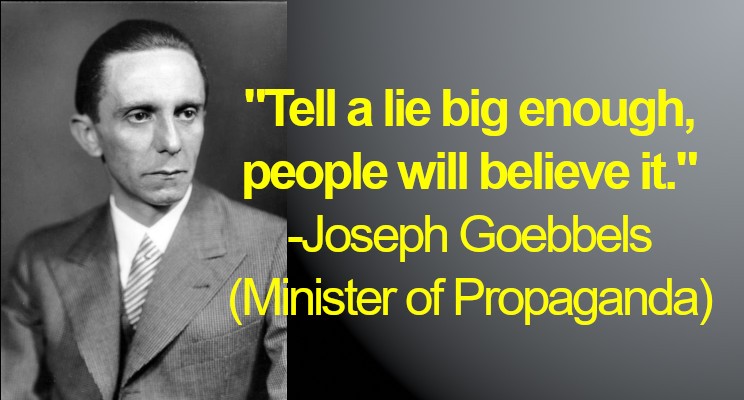
It you believe it sounds too good to be true, it’s because the rich have been successful in indoctrinating you with the Big Lie.











 #Monetary Sovereignty - Mitchell